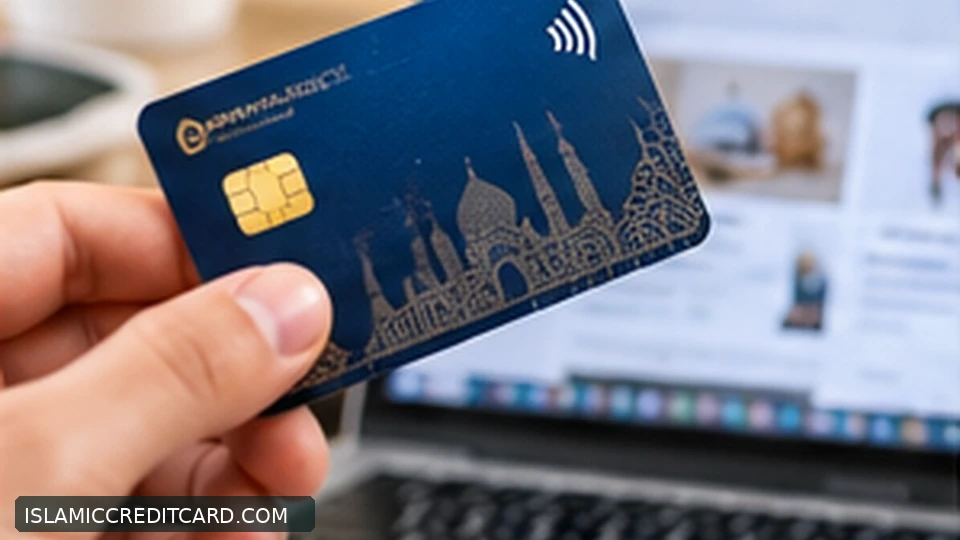
A card offering haram rewards is one whose points, cashback, miles or welcome bonus are earned on, funded by or promoted through activities that Islamic law prohibits: alcohol, gambling, interest-based products or other forbidden trades. The card may be flawless in its payment mechanism and still be problematic through its incentive scheme.
This page looks at the reward side only. It explains how a bonus can be tied to something impermissible, how to read a rewards brochure with a Sharia lens, what scholars generally say about points and cashback, and how to keep the benefit while excluding the doubtful parts.
How a reward becomes problematic
Rewards are paid by someone. Understanding who pays, and for what behaviour, is the first step in judging them. Three patterns account for most of the concern raised by Sharia boards and advisers.
Pattern one: bonus categories on forbidden merchants
Some programmes pay accelerated points for spending at liquor stores, casinos, betting platforms or lottery sellers. The card promotes the forbidden activity by rewarding it. Even when the standard rate is general, a bonus calendar can feature such merchants.
Pattern two: rewards that grow with interest paid
On certain conventional cards the points rate improves for customers who revolve a balance or take a cash advance, or the issuer awards bonus points when a loan is added. Here the reward is a share of the benefit the bank draws from riba.
Pattern three: offers tied to interest products
Welcome gifts may require opening a savings account that pays interest, taking a personal loan or buying a conventional insurance policy. The card is the vehicle, but the prize is conditional on entering a prohibited contract.
An illustrative example of reading a rewards offer
Example (illustrative, not a real programme): a card advertises 1 point per 1 dollar on all spending, 5 points on "leisure and nightlife", and 10,000 bonus points when the customer takes an instalment plan with a stated interest rate. A Sharia-conscious reader would split the offer as follows.
| Offer element | Likely concern | Typical reading by cautious boards |
|---|---|---|
| 1 point per 1 dollar, all spending | Funded by interchange fees | Often accepted if the card itself is permissible |
| 5 points on nightlife | May include bars and casinos | Restrict or exclude the category |
| 10,000 points for an interest instalment plan | Reward conditional on riba | Not acceptable |
| Points redeemed for airline tickets | Redemption is a purchase | Generally acceptable if no prohibited item |
If 100 points are worth 1 dollar, the 10,000-point bonus equals 100 dollars: a real cash incentive to borrow at interest. That is the part which a diligent buyer should refuse, while a separate decision is needed for the base rate.
What scholars say about rewards in general
Views are varied. Rewards can be analysed as a discount given by the merchant bank out of interchange income, a gift from the issuer, or a hidden return on spending. No single classification fits every programme.
When a reward is considered acceptable by many
Many Sharia boards accept points and cashback on an Islamic card when the rewards are paid from fees the merchant pays, are not tied to any financing charge, are not conditional on holding a balance, and exclude prohibited merchants.
When boards advise caution or refusal
Rewards linked to the amount of credit used, to interest earned or to forbidden spending categories are the ones most often rejected. A programme that pays more to those who borrow more has a direct link to the lending income.
Benefits received indirectly
If a card is conventional, even neutral rewards may be seen as part of the same interest-based package. Some scholars therefore consider that the question is decided first at the level of the card contract and only then at the level of its perks.
A reading guide for any rewards brochure
Marketing leaflets present rewards in glossy language, while the real rules are in the programme terms. Follow this order to avoid misreading.
- Get the rewards terms, not only the card brochure.
- List every earning category and bonus offer, including seasonal ones.
- Mark any category that includes alcohol, gambling, adult entertainment or tobacco-led retail.
- Check whether a bonus depends on a loan, savings account or insurance product.
- Look at the redemption catalogue for forbidden items and gift cards to excluded merchants.
- Ask the issuer how rewards are funded and whether its Sharia board reviewed the programme.
Mistakes and refusals
Problems with rewards usually come from automatic features and from assumptions about what a merchant category contains. These are the situations people report most frequently.
Merchant category codes are broad
Card networks classify shops with codes, and a category such as "restaurants" or "entertainment" can include venues serving alcohol or hosting gambling. Check the exact list of included codes, and consider declining a bonus whose category is not clear.
Automatic enrolment in promotions
Some programmes register you for new offers by default. Review notifications each quarter and opt out in writing of any promotion tied to interest or forbidden spending. Keep a copy of the opt-out.
Converting points into forbidden gift cards
Points can be exchanged for vouchers, and the catalogue may include online betting credit or liquor delivery. Redeem only for items you have checked, such as travel, groceries or household goods.
The halal counter-structure and alternatives
A better design pays rewards on lawful spending, keeps them free from any financing link and gives the cardholder control over exclusions. A few options show how this works in practice.
Rewards on an Islamic card with exclusions
Islamic issuers that offer points commonly state that they apply to lawful categories, fund them from merchant fees and exclude a defined list. Ask for the list in writing, and for the Sharia board's note on the programme.
Cashback as a fixed percentage on lawful spend
A flat cashback of, for example, 1% on groceries and transport is simple to audit. It is easier to check than a points scheme with rotating categories, so it suits cautious users.
Declining rewards altogether
Some people choose a card without any reward scheme so that nothing needs to be audited. The saving in time and doubt can outweigh a modest annual value, especially when spending is below a few thousand a year.
Frequently asked questions
Are all card rewards haram? No. Many Sharia boards accept points and cashback on a permissible card when funded by merchant fees and not linked to borrowing or forbidden merchants. A conventional interest-bearing card is treated differently.
What if I never use the bonus category? Not using it removes direct participation, which is a good step. The card itself must still be assessed, since the programme may promote the category and the contract may contain interest.
Can I give away points from a doubtful programme? Some scholars advise ceasing to earn and not to benefit from doubtful points. Whether to donate or let them lapse is a matter to put to a qualified scholar.
Do airline miles count as interest? Miles earned on purchases are generally analysed as a marketing reward, not as a return on a loan. The concern arises when miles depend on borrowing or on interest paid.
How can I check what a merchant category includes? Ask the issuer for the merchant category codes of each bonus category and compare them with your spending. If the answer is vague, treat the category as doubtful.
Disclaimer: this page is general information, not a fatwa. Confirm the permissibility of a programme with the issuer's Sharia board or a qualified scholar.